Table of Contents
- Brenda
- The Lafferty Family
- Marriage 1982
- The articulation of “removal”
- The Murders
- Arrest and Capture
- Conclusion
Brenda
In January 1984, Brenda Wright Lafferty was a 24-year-old woman living in American Fork, Utah, navigating the ordinary pressures of early adulthood marriage, motherhood, and the quiet work of building a life. She was thoughtful, socially confident, and independent-minded, known to friends and family as someone who could disagree without cruelty and assert herself without spectacle. She was rooted in relationships, learning, and ambition, and she moved through the world with a sense of purpose that did not demand attention to be felt. Her infant daughter, Erica, was at the centre of that life: a child defined not by what was done to her, but by the care, attention, and future her mother imagined on her behalf.
Brenda and Erica are most often introduced in the historical record at the moment of their deaths. This article begins earlier, where they belong as people whose lives carried meaning long before they carried consequence.
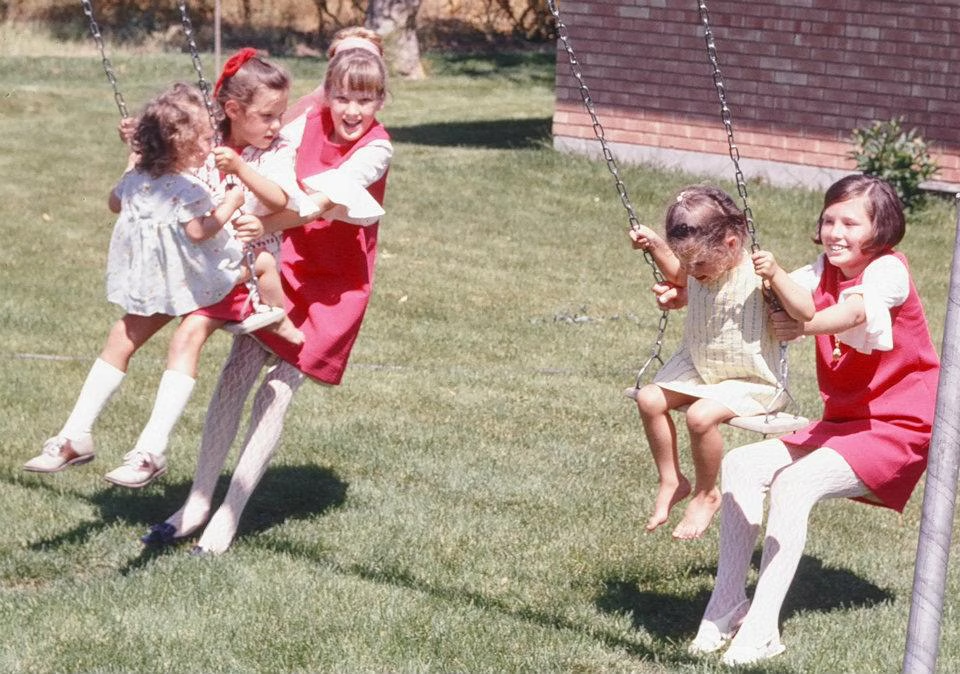
Brenda Wright was born on July 19, 1960, in Logan, Utah, to LaRae Hatch Wright and Dr. James Lewis Wright, members of The Church of Jesus Christ of Latter-day Saints. The Wright family was close-knit, particularly among the sisters Betty, Brenda, Bonnie, Janette, and Sharon whose bonds would remain significant throughout Brenda’s life.
After graduating from high school in 1978, Brenda’s talent and confidence led her to compete in the Miss Twin Falls, Idaho pageant. She performed “Somewhere Over the Rainbow,” placing first runner-up and earning a college scholarship.

Brenda dreamed of becoming a broadcast journalist, a goal encouraged by both of her parents. Using her scholarship, Brenda pursued a degree in broadcast journalism and later worked as a student news anchor on a BYU-produced television news program. It was at Brigham Young University that she met the man who would become her husband, Allen Lafferty.
The Lafferty Family
Through her marriage to Allen Lafferty, Brenda entered a family that was outwardly cohesive, deeply religious, and tightly bound by shared history. The Laffertys were raised within the traditions of The Church of Jesus Christ of Latter-day Saints, with an emphasis on obedience, patriarchal authority, and clearly defined moral roles. To outsiders, the family appeared devout and disciplined a household shaped by certainty rather than doubt.
Beneath that surface, however, authority within the family was rigidly enforced. The household was led by Watson Lafferty Sr., a domineering patriarch whose religious devotion was expressed through control rather than pastoral care. His beliefs reflected a highly conservative interpretation of faith, reinforced by far-right political views and a deep suspicion of secular institutions, including conventional medicine. He expected unquestioned obedience from both his wife and his children, shaping a family culture in which dissent was discouraged and autonomy was treated as defiance.

Among his sons, these expectations were absorbed unevenly. Some negotiated distance from the family’s authority as adults, while others remained more closely bound to its moral hierarchy a divergence that would later carry profound consequences. This divergence would be most sharply embodied in his eldest son, Ron, and in Dan his younger brother, who remained closely aligned with him.
Marriage 1982
After their marriage in April 1982, Brenda Wright Lafferty and Allen Lafferty settled into what appeared to be an unremarkable life in American Fork. Allen worked locally, establishing his own tiling business, while Brenda continued to pursue her career in broadcast journalism. Their early marriage was shaped less by overt conflict than by the negotiation of expectations how authority would function within the home, whose values would take precedence, and what independence would be permitted to survive marriage.
Brenda did not reject domestic life, nor did she resist motherhood. What she resisted was the idea that marriage required the surrender of judgment. Her autonomy was quiet but persistent, expressed not through confrontation but through continuity: remaining in work, maintaining friendships, and making decisions that reflected her own moral compass. These were not radical acts. They were ordinary ones and that ordinariness would later become significant.
The pressure surrounding these questions did not originate solely within the marriage. Allen remained closely connected to his family, where ideas about obedience, hierarchy, and spiritual authority were increasingly being reframed. In the early years of Brenda and Allen’s marriage, Ron Lafferty’s beliefs were already shifting, moving away from institutional religion toward a more personal and absolutist understanding of revelation. These beliefs were not initially expressed as violence or threat. They surfaced instead as expectations about gender roles, loyalty, and the consequences of dissent.
Brenda stood outside this evolving framework. She did not share it, and she could not be easily absorbed into it. Her refusal to subordinate her judgment, particularly as a woman within a family that increasingly equated obedience with righteousness, marked her as different. At the time, this difference registered as tension, not danger. Only later would it become clear how threatening moral autonomy could appear within a worldview that allowed no room for it.

As the early years of Brenda and Allen’s marriage unfolded, the pressures shaping their private disagreements became harder to contain. Allen Lafferty continued to act as an intermediary translating expectations, softening language, and reassuring himself that competing loyalties could still be reconciled. What had once felt like manageable tension acquired moral weight. Decisions about work, family, and independence were no longer framed as preferences, but as measures of obedience.
This shift did not originate within the marriage itself. It reflected the increasing influence of Ron Lafferty, whose beliefs were becoming more rigid and more personal, recast not as interpretation but as mandate. Authority asserted itself quietly, through repetition and certainty, as the space for disagreement narrowed. Allen’s mediation began to fail not because he withdrew, but because there was less room left in which compromise could exist.
Brenda did not adjust her life in response. She continued to work, to maintain relationships beyond the Lafferty family, and to speak plainly about her concerns. Her resistance was not ideological; it was practical. She did not argue theology. She insisted on judgment. In doing so, she became a point of reference for others navigating similar tensions a woman whose presence demonstrated that independence did not require estrangement, and dissent did not negate faith.
As Ron’s worldview hardened, those around him were forced to position themselves in relation to it. Some accommodated its demands. Others withdrew quietly. Brenda did neither. She spoke openly with family members, offered reassurance to those struggling under increasing pressure, and sought counsel outside the closed system of authority Ron was attempting to construct. These were not acts of confrontation, but acts of visibility and visibility itself became destabilising.
Allen’s efforts to shield his wife grew less effective as the terms of loyalty shifted. What he continued to frame as family disagreement was increasingly recast as spiritual danger. His mediation depended on the assumption that accommodation remained possible. Ron’s beliefs no longer allowed for accommodation. They required alignment.
By this stage, Brenda’s influence extended beyond the boundaries of her marriage. She was no longer only a wife asserting her own autonomy, but a reminder to others as much as to Ron that moral independence could persist even under pressure. Within a system that equated authority with righteousness, that persistence was not neutral. It was obstructive.
The articulation of “removal”
By late 1983, the language surrounding dissent within the Lafferty family had begun to change. What had once been described as disagreement or concern was increasingly framed as corruption a threat not simply to harmony, but to spiritual order itself. Within this narrowing framework, the problem doesn’t present as what to do about belief, but what to do about people who refuse it.
It was during this period that Ron Lafferty began to articulate a theology that allowed for exclusion to be reimagined as duty. Revelation, as he understood it, no longer required persuasion or endurance; it required action. Those who obstructed divine order were no longer erring individuals, but impediments elements to be removed so that righteousness could proceed unimpeded. The logic was internally consistent, even as it severed itself from moral restraint.
Crucially, this language did not emerge in isolation. It was reinforced by alignment. Dan Lafferty did not challenge the framework; he absorbed it, affirming Ron’s authority and lending it relational legitimacy. Where others hesitated or withdrew, Dan remained, narrowing Ron’s world further until belief no longer required broad consensus only one witness.
Within this logic, Brenda occupied a singular position. She was not merely dissenting. She was visible, influential, and unreachable by coercion. She did not recant, retreat, or disappear. Her autonomy persisted, and worse, it endured in the lives of others. In a system that defined righteousness through obedience, such endurance could not be tolerated indefinitely.
At this stage, violence had not yet occurred but it had become thinkable. The idea of “removal” was no longer a metaphor or a rhetorical device. It was a solution waiting for permission. The belief system did not announce what it would do; it simply made clear that there was no longer room for someone like Brenda within it.
This is the point at which inevitability becomes visible in retrospect. Not because the outcome was preordained, but because every alternative had been quietly stripped away. Once dissent was reframed as danger, and obedience elevated above conscience, the question ceased to be whether harm would occur, and became only where it would land.
The final restraints on Ron’s belief system fell away when it was formally rejected. In 1983, Ron Lafferty was excommunicated from The Church of Jesus Christ of Latter-day Saints after refusing to renounce his claimed revelations and increasingly extreme assertions of authority. The process was intended as correction. Instead, it functioned as confirmation. Removed from institutional oversight, Ron reframed rejection as persecution and elevated his certainty accordingly. Authority no longer needed recognition; it would now justify itself.
Around the same time, Ron’s marriage collapsed. Diana Lafferty, increasingly alarmed by his behaviour and beliefs, separated from him. Her departure was not a theological dispute but a personal refusal a withdrawal from a system that had become coercive and unpredictable. For Ron, this loss did not weaken his sense of mandate. Diana was not an adversary to be erased, but a possession to be reclaimed. Her absence sharpened his grievance while preserving his entitlement.
Together, these ruptures closed what little space for restraint remained. External authority had failed to restore order. Intimate loyalty had been withdrawn. What persisted was Ron’s belief in his own divine commission, now intolerant of obstruction. Those who affirmed him remained. Those who resisted were reclassified not as dissenters, but as impediments to restoration.
Within this framework, Ron began to identify specific individuals whose continued presence undermined what he believed must be rebuilt. At the centre of this logic was Brenda Wright Lafferty. Brenda was neither distant nor abstract. She was visible, influential, and beyond Ron’s authority. She supported Diana’s separation, maintained her own autonomy, and continued to exert quiet influence within the family. She did not recant, retreat, or disappear. In Ron’s worldview, that persistence made her uniquely dangerous.
Other targets followed, each representing a different form of resistance. Richard Stowe, who had presided over Ron’s excommunication, embodied institutional refusal a public denial of Ron’s claimed authority that could not be reversed through persuasion. Chloe Low, who counselled Diana during her separation, represented an intrusion Ron could not control: a woman exercising moral influence over his marriage from outside his reach. In Ron’s logic, both stood between him and restoration, not through aggression, but through refusal.
That Brenda was placed first among these targets was not incidental. Unlike institutional figures, she lived within reach. Unlike others who withdrew, she remained present. And unlike those who deferred, she did not concede authority she did not recognise. Removing Brenda promised resolution the reclamation of loyalty, the silencing of influence, and the restoration of order by example. By the time these targets were named, violence had not yet occurred, but it had become thinkable. The belief system no longer debated outcomes; it selected obstacles.
Brenda’s endurance her refusal to submit, withdraw, or disappear marked the point at which belief crossed into intent. She was not targeted because she was confrontational, but because she remained. And within a system that equated righteousness with obedience, that endurance could not be tolerated indefinitely.
The Murders
“In my 12 years as a judge, I have never presided over a trial of such a cruel, heinous, pointless and senseless a crime… Nor have I seen an accused who had so little remorse or feeling”.
Judge J. Robert Bullock
On January 24, 1984, the logic Ron Lafferty had been articulating was enacted. Ron Lafferty, accompanied by his brother Dan Lafferty, went to the home of Brenda Wright Lafferty in American Fork, Utah. Brenda was there with her infant daughter, Erica Lafferty.
What followed was not a spontaneous act of rage, but the deliberate execution of a belief system that had already resolved its moral questions. Brenda was killed first. Her daughter was killed afterward. The order mattered only insofar as it reflected the logic that had preceded it: removal was not symbolic, and it was not partial.
The murders were framed by Ron not as crime, but as obedience. In his understanding, he had acted under divine command, carrying out what he believed was necessary to restore order. That belief did not fracture in the moment of violence. It had already hardened long before.
News of the killings did not produce the restoration Ron anticipated. Diana did not return. Allen did not submit. Authority was not reclaimed. Instead, the acts exposed the belief system in full stripped of its language of righteousness and reduced to irrevocable harm.
Brenda and Erica are often remembered together because they were killed together. It is worth holding, even briefly, that they were also living together a young mother and her child, rooted in ordinary life, making plans that were never extravagant or defiant, only their own. Their deaths did not mark the beginning of this story. They marked the moment when its accumulated failures became impossible to ignore.
Arrest and Capture
Within days of the 24 July 1984 murders of Brenda Lafferty and her infant daughter Erica, investigators focused on Ron and Dan Lafferty. Family members had already raised concerns about Ron’s escalating extremism and his claimed “revelations.”
While fleeing Utah, the brothers travelled with Richard “Ricky” Knapp and Charles “Chip” Carnes. During that period, the group burglarized the home of Chloe Low, another person named in the written “removal” revelation.
On 30 July 1984, Knapp and Carnes were arrested in Cheyenne, Wyoming, after police found Ron Lafferty’s Chevrolet Impala outside Carnes’ father’s house. Their cooperation helped direct authorities to Ron and Dan’s location in Reno.
On 7 August 1984, FBI agents arrested the brothers at the Circus Circus Hotel and Casino, taking them into custody in the buffet line.

They were charged with two counts of murder, aggravated burglary, and conspiracy counts tied to additional intended victims.
After arrest, both men spoke of Ron’s written “revelation” as justification for the killings, and Dan later claimed they abandoned plans for further attacks after missing the turnoff to Richard Stowe’s home.
Conclusion
Brenda Wright Lafferty was not a symbol, a warning, or a footnote in someone else’s belief system. She was a young woman navigating marriage, faith, and independence with quiet resolve, raising her daughter while making choices that reflected her own conscience rather than submission to authority. Those choices—ordinary, human, lawful—were enough to place her in danger.
Erica Lafferty had no beliefs, no defiance, no role in the conflicts that surrounded her. Her life was ended not because of who she was, but because of who her mother was to others.
In the months before the murders, warning signs were present. Family members knew of Ron Lafferty’s escalating extremism. Church leaders were aware of his rigidity and anger. Others understood that his sense of grievance had hardened into something dangerous. None of these facts were invisible at the time. What failed was not foresight, but intervention.
The murders were later framed by their perpetrators as acts of faith, obedience, or revelation. They were none of these things. Belief did not kill Brenda and Erica. Men did—men who chose violence, who rejected restraint, and who cloaked responsibility in the language of inevitability.
Brenda and Erica’s deaths do not demand explanation so much as remembrance. Their lives were not meaningful because of how they ended, but because they existed at all. Any account that lingers too long on the men who took them risks repeating the same erasure that made the violence possible in the first place.
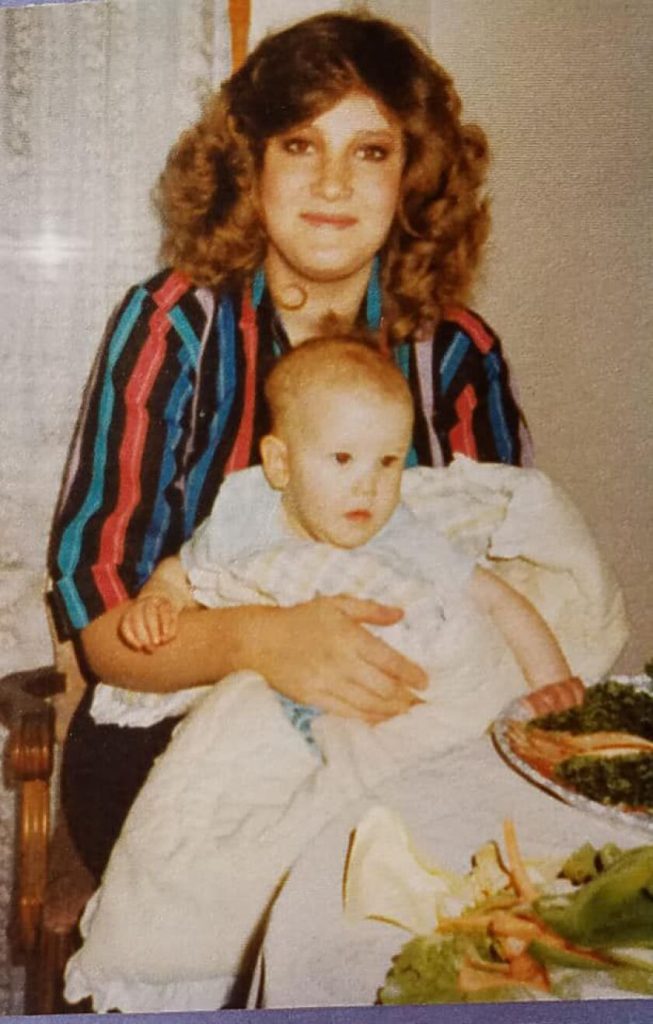
In the end, there was no revelation—only the absence of Brenda and Erica, where ordinary life should have gone on.