Table of Contents
- Villisca
- The Moore Family and Stillinger Girls
- June 9th 1912
- The Murders
- Discovery and Investigtion
- Suspects
- Epilogue
Villisca
Villisca is a city in East Township, Montgomery County, Iowa, United States. Villisca was platted in 1858 by D. N. Smith, a 19th-century railroad employee and pioneer.
Smith named the town “Villisca.” He reportedly believed the word originated from the Sac and Fox tribes, translating it to mean “pretty place” or “lovely view.”
Some historians have suggested that Smith may have intended to use a word closer to “Wallisca,” translating to “evil place,” a naming interpretation often referenced in light of the town’s later infamous history. This interpretation, however, is not supported by linguistic evidence and appears to be a later folkloric construction, emerging after the 1912 murders rather than reflecting documented intent.
Villisca grew quickly after the railroad arrived in the 1870s, becoming an agricultural hub surrounded by corn and livestock farms. By the early 1900s, it was a typical Midwestern town church-centred, close-knit, and prosperous for its size.
Villisca was unremarkable in the best sense of the word: orderly, stable, and rooted in routine and community life. In June 1912, a single violent event irrevocably altered how the town was perceived. That notoriety never fully faded and, in many ways, reshaped Villisca’s identity both internally and in the national imagination.
The Moore Family and Stillinger Girls
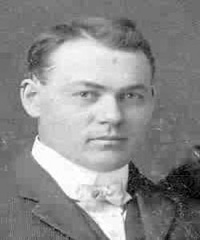
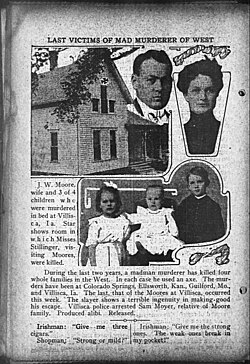
Josiah Moore Born: 1868 was a local businessman in Villisca, Iowa, working primarily as a retail merchant dealing in farm implements. He was regarded as hard-working, respectable, and dependable, reflecting the values of a small Midwestern commercial class. Moore was active in the Presbyterian Church, where he served in leadership roles, and was known as a devoted family man.
Sarah Moore Born: 1873 was deeply involved in church and domestic life, embodying the expectations placed on women in early 20th-century rural America. She was described as quiet, attentive, and conscientious, particularly devoted to her children. Sarah had a history of health concerns, including periods of illness that required rest and care, though these were not unusual for women of the era. She played a central role in maintaining the household and supporting the family’s religious and social obligations.
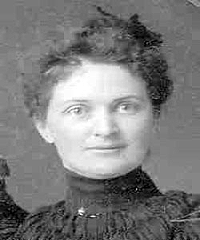
Josiah and Sarah Moore represented the idealised image of respectability in Villisca: church-going, family-oriented, and socially integrated. There is no credible evidence that either was involved in controversy, criminal activity, or serious conflict with others in the community an absence that has only deepened the mystery surrounding their deaths.
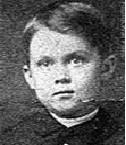
Herman aged 11 was the eldest Moore child and likely carried quiet expectations of responsibility. He attended school regularly and was described as bright and dependable, typical of boys expected to help their fathers transition into farm or trade work. He would have been old enough to understand household routines and community norms, making his death especially unsettling to locals who knew him.
Mary Katherine aged 10 (often called Katherine or Kate in records) was close in age to Herman and likely shared many school and church activities. She was described as well-mannered and studious, fitting the expectations placed on young girls in church-centred families. She occupied the transitional age between childhood and adolescence, which later amplified public sympathy toward the family.
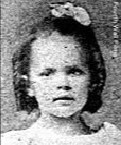
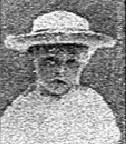
Arthur aged 7 was still firmly in early childhood. At this age, his world would have been centred on home, siblings, and basic schooling. Contemporary accounts describe him simply as healthy and normal for his age, which in historical terms often meant lively, curious, and closely attached to his mother.
Paul aged 5 was the youngest Moore child. He was sometimes referred to as “Paul” or “Pauline” in early reports “Pauline” was used colloquially, not as a formal name. At five, he would not yet have been fully integrated into school life and would have spent most of his time under Sarah Moore’s care. His age made the crime particularly shocking even by early 20th-century standards, where childhood mortality was sadly common but violence of this nature was not.
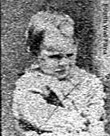
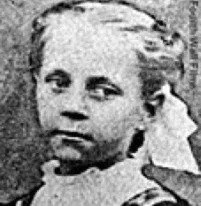
Lena Stillinger aged 12 was the older of the two Stillinger Girls, and at twelve, was approaching adolescence. She likely held informal responsibility for her younger sister, a common expectation at the time. Lena attended the same church activities as the Moore children and was known locally as quiet and responsible. Her decision to stay overnight with Ina was a routine, socially normal occurrence, which tragically placed both girls at the crime scene.
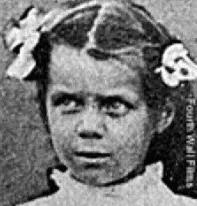
Ina Stillinger aged 8 was like many children of the era, she participated actively in church and community life. On the evening of June 9, 1912, she accompanied her sister to the Moore home after a church children’s program, having been invited to stay overnight. Contemporary accounts describe Ina as healthy, well-behaved, and typical for her age, with no indication of behavioural or social difficulties. Her presence in the Moore home was entirely circumstantial, the result of an innocent social visit.
June 9th 1912
EIGHT SLAIN IN HOME WHILE THEY SLEEP
The New York Times, 11 June 1912.
On Sunday, 9 June 1912, the Moore family and the two visiting Stillinger sisters followed a routine, publicly observed day in Villisca. Nothing in their movements or behavior suggested conflict, distress, or impending danger. The normalcy of the day is one of the most striking aspects of the case.
During the morning and early afternoon, the Moore family remained at home, attending to ordinary domestic activities. No neighbors or acquaintances later recalled anything unusual in the household’s conduct. Josiah Moore was seen in town earlier in the day, carrying out routine matters, and there were no reports of disputes or strange encounters involving any family member.
That evening, the Moore family attended a children’s program at the local Presbyterian Church. Ina and Lena Stillinger were also present at the event. Witnesses later stated that the family appeared calm, sociable, and in good spirits. After the program concluded, the Moore children invited the Stillinger sisters to stay overnight. Permission was obtained from their parents, a common and socially acceptable practice at the time.
At approximately 9:00 to 9:30 p.m., the Moore family and the Stillinger girls walked together from the church to the Moore residence. Several townspeople saw them along the route. This walk home represents the last confirmed sighting of all eight victims alive. No witnesses reported anyone following them or behaving suspiciously nearby.
Once home, the household settled for the night. Lamps were extinguished, doors were closed, and the occupants went to bed. Later investigation found no signs of forced entry, and no neighbours reported hearing shouting, struggle, or disturbance during the night.
The crime was not committed in sudden passion, but with a degree of calmness that has puzzled officers.
Des Moines Register — June 15, 1912
The Murders
The murders in the Moore family home are believed to have occurred late on the night of Sunday, 9 June, or in the early hours of Monday, 10 June 1912, most likely after midnight. This estimate is based on the household retiring at a normal hour, the absence of any reported disturbance, and early responder assessments that the town was fully quiet when the attack took place. There were no signs of forced entry, strongly suggesting the perpetrator entered either through an unlocked door or had access to the house while the occupants slept.
The evidence indicates the killer began upstairs, where Josiah and Sarah Moore were sleeping. They were likely attacked first, a sequence inferred from both practicality and control: neutralising the adults would reduce the risk of resistance or interruption. Investigators noted that the victims were struck with the blunt end of an axe, a choice that required close physical proximity and repeated force. The use of the blunt edge, rather than the blade, is one of the earliest indicators that this was not a hurried or panicked act.
After killing the parents, the perpetrator moved to the adjacent bedroom where the Moore children were sleeping. The children were attacked while still in their beds, again without evidence of struggle or awakening. Contemporary observers remarked on the severity and repetition of the blows, particularly to the younger children. While all victims suffered fatal injuries, the youngest children exhibited clear signs of overkill, meaning the level of violence exceeded what would have been necessary to cause death. This aspect disturbed early investigators and remains psychologically significant: it suggests either heightened emotional discharge at this stage of the crime or a compulsive need to ensure death.
The final victims were Ina and Lena Stillinger, who were sleeping in a downstairs bedroom. Their presence was circumstantial, yet the perpetrator sought them out deliberately, indicating a methodical room-to-room progression rather than selective targeting. As with the other victims, they appear to have been attacked while asleep. The decision to kill the visiting children eliminated witnesses and reinforces the impression that the offender was thorough, controlled, and unconcerned with escalation.
Beyond the killings themselves, the crime scene revealed a number of unusual post-offense behaviors. The perpetrator is believed to have remained inside the house for a considerable period after the murders. Covers were pulled over victims’ faces, mirrors and windows were obscured, and the axe was wiped clean and returned to a location within the house. Food was handled, and there are indications the offender washed before leaving. These actions point to a person who was not in a state of panic, but instead demonstrated ritualistic or calming behaviours following the violence.
Taken together, the sequence and behavior suggest a perpetrator who acted slowly, deliberately, and with emotional detachment, at least during the early stages of the crime. The escalation toward overkill with the youngest victims may indicate either a psychological release, loss of control as the act progressed, or a specific fixation. What is most striking is not only the brutality, but the quiet, ordered nature of the event: eight people killed in a small house, in a close-knit town, without a single sound alerting neighbours.
Discovery and Investigtion
The crime was discovered on the morning of Monday, 10 June 1912, after the Moore household failed to follow its normal routine in Villisca. The family did not emerge for chores, the children did not appear for school, and the house remained unnaturally quiet. Concerned neighbours among them Mary Peckham approached the home. Receiving no response, Peckham contacted Ross Moore, Josiah Moore’s brother, who entered the house using a key or through a door that required no forced entry. Contemporary accounts differ on the precise method of entry, but all agree that no door or window showed signs of being broken or tampered with.
Ross Moore entered the house and went upstairs, where he discovered the bodies of his brother and sister-in-law. Contemporary accounts indicate this was the first discovery, after which he immediately raised the alarm. Instead of securing the scene, neighbours, town officials, and curious residents quickly entered the house. Within hours, dozens of people including reporters had walked through multiple rooms. This uncontrolled access would become the single most damaging error in the entire investigation.
Montgomery County Sheriff Hank Horton arrived soon after the discovery and assumed control of the investigation. Horton confirmed that all eight victims were dead and that the murders appeared to have occurred during the night. A coroner’s inquest followed, concluding that the victims were killed while asleep with the blunt end of an axe, likely belonging to Josiah Moore. However, by the time official examinations began, the crime scene had been irreversibly compromised.
In the aftermath of the murders, as shock spread through Villisca, formal authority arrived too late to preserve the scene but early enough to record what could still be seen. By the time law enforcement assumed control, the house had already been entered by neighbors, officials, and onlookers, irreversibly compromising any chance of preserving physical evidence. Against this backdrop, the coroner’s inquest was convened on June 10, 1912, continuing into the following day.
The purpose of the inquest was limited and procedural. It was tasked not with identifying a suspect, but with determining the cause and manner of death. Testimony and observations were therefore drawn from visible injuries, the arrangement of the bodies, and statements from those who had entered the house. Despite the compromised conditions, several conclusions emerged with clarity and consistency.
The inquest established that all eight victims died as a result of blunt-force trauma to the head. The injuries were uniform in nature and were caused by the blunt end of an axe, later identified as belonging to Josiah Moore and taken from within the house itself. The repeated use of the blunt edge, rather than the blade, required close proximity and sustained force, reinforcing the conclusion that the murders were deliberate rather than impulsive.
It was further determined that the victims were attacked while asleep or otherwise incapacitated. There was no evidence of defensive wounds, no signs of struggle, and no indication that any of the victims had time to raise an alarm. Some accounts suggest that one of the Stillinger sisters may have moved or partially awakened after the initial blow. However, the inquest did not document clear defensive wounds, and any movement appears to have been brief and reflexive rather than indicative of active resistance. This finding aligned with neighbour testimony that no cries or disturbances were heard during the night and supported the conclusion that the killings occurred quietly, likely during the late-night or early-morning hours.
The post-mortem examinations, referred to at the time as autopsies, were limited by the medical standards of the era. Conducted by local physicians rather than forensic specialists, they consisted largely of external examinations and observational findings. Nonetheless, these examinations confirmed the inquest’s conclusions and added important detail. Physicians documented the number, severity, and placement of wounds, noting that the force used in several cases far exceeded what would have been necessary to cause death.
This excess was most apparent in the injuries inflicted on the youngest children. While the language of the time did not employ modern psychological terminology, officials clearly recognised the disproportionate violence involved. These observations would later become central to interpretations of the crime, suggesting escalation, compulsion, or a need for absolute certainty on the part of the offender.
Despite these findings, the inquest and examinations could not determine who committed the murders, establish a precise time of death, or clarify whether one or more perpetrators were involved. There was no capacity for toxicology, blood analysis, fingerprint comparison, or trace evidence preservation. By the time formal proceedings took place, the opportunity to gather such evidence had already passed.
Taken together, the inquest and autopsies solidified the foundational understanding of the Villisca murders. They confirmed a crime marked by silence rather than chaos, repetition rather than frenzy, and control rather than haste. At the same time, they underscored the profound limitations of early twentieth-century investigative practice. The official findings clarified how the victims died, but they offered no path toward identifying who was responsible, leaving the case suspended between certainty of method and enduring absence of resolution.
Suspects
In the absence of preserved physical evidence, the investigation into the murders in Villisca quickly shifted from forensic inquiry to suspect-driven theories. From the beginning, individuals were identified largely on the basis of proximity, reputation, rumour, or perceived motive rather than demonstrable links to the crime scene. This approach shaped and ultimately undermined every major line of inquiry.
The most formally pursued suspect was William Mansfield, a former Iowa National Guardsman with a volatile temperament and a criminal background. Mansfield drew attention after private detective William J. Burns promoted a theory connecting the Villisca murders to a series of other axe killings across the Midwest. Mansfield was known to have violent tendencies and was believed to have traveled extensively, placing him within a speculative geographic framework. However, despite intense scrutiny and a highly publicised trial, investigators failed to produce any physical or eyewitness evidence placing him in Villisca on the night of the murders.
Witness timelines proved unreliable, and the prosecution relied heavily on character judgment rather than proof. Mansfield was ultimately acquitted, and the case against him is now regarded as a product of speculative profiling rather than evidence-based investigation.
Another prominent suspect was George Kelly, a traveling minister who had been in Villisca at the time of the murders. Kelly attracted suspicion due to his social awkwardness, reported inappropriate behavior toward children, and disturbing letters he later wrote while in custody. Under prolonged interrogation, Kelly confessed to the murders, only to recant shortly afterward. His confession was internally inconsistent and failed to align with established crime-scene details, including the sequence and manner of the killings. Courts later ruled that the confession had been obtained under coercive conditions, and Kelly was released. Subsequent analysis suggests that Kelly lacked both the physical capacity and the behavioral consistency required to carry out the crime as it occurred.
Suspicion also fell on Frank Jones, a former Iowa state senator and local businessman. Jones was rumoured to have had a personal and professional feud with Josiah Moore stemming from business disputes. This theory gained traction largely through press speculation and community gossip, rather than investigative findings. No evidence placed Jones in Villisca on the night of the murders, nor was there proof that he arranged for the crime to be carried out by another party. Even contemporary investigators acknowledged that the theory rested on hearsay and perceived motive rather than substantiated fact.
Beyond named individuals, investigators questioned numerous itinerant laborers, railroad workers, and transients who passed through the region. These inquiries reflected early twentieth-century anxieties about mobility and outsiders, particularly in the wake of a crime that appeared both methodical and impersonal. None of these individuals could be credibly linked to the crime scene, and no belongings, witnesses, or confessions tied them to the murders. This broad and unfocused approach further diluted the investigation and diverted attention from more disciplined analysis.
Ultimately, every suspect investigation failed for the same underlying reasons. The crime scene had been irreparably contaminated before formal examination, eliminating the possibility of reliable physical evidence. Forensic science was rudimentary, offering no means to establish precise time of death, biological linkage, or trace comparison. Media pressure encouraged investigators to identify suspects quickly, while reliance on confessions and character assessment replaced corroboration. Most critically, no suspect could be tied to a motive that plausibly accounted for the totality of the crime, including the deliberate killing of the visiting Stillinger sisters.
What emerges from the suspect history is not a hidden perpetrator narrowly missed, but a pattern of investigative limitation. Each suspect fit a narrative, but none fit the evidence established by the inquest. The sequence of accusations reveals more about the constraints and failures of early twentieth-century criminal investigation than it does about the identity of the killer, leaving Villisca defined as much by investigative absence as by the crime itself.
The suspects, paid a human price. Several men were publicly accused, interrogated, arrested, and in some cases tried, without conclusive evidence. Some lost reputations, employment, mental health, and years of their lives. Even when acquitted or released, suspicion lingered. The investigation’s failures ensured that innocence was never fully restorative, and guilt was never definitively assigned. In this sense, the tragedy expanded to include people who may well have been victims of circumstance, coercion, or institutional failure rather than perpetrators.
Epilogue
The human cost is not abstract. It is measured in birthdays that never came, in parents who never returned home, in children who never grew older
In the end, Villisca does not offer answers so much as it offers a reckoning. The crime resists the tidy closure that history sometimes grants no named perpetrator, no final confession, no certainty strong enough to quiet doubt. What remains is the space left behind: in records that fall silent, in rooms that once held ordinary life, and in a town that learned, abruptly and forever, that safety can be an assumption rather than a guarantee.
Time has carried the story forward, but not away. Each retelling tries, in its own way, to impose order—through timelines, suspects, profiles, theories. Yet the most enduring facts are the simplest: a family ended, two visiting children lost, and a community altered in a single night. The human cost is not abstract. It is measured in birthdays that never came, in parents who never returned home, in children who never grew older, and in suspects whose lives were bent by suspicion even when proof failed them.
The investigation’s failures matter, but not because they promise a different outcome had they been avoided. They matter because they remind us how fragile truth can be when fear moves faster than care. Evidence can be trampled; memory can be reshaped; certainty can harden around the wrong thing. Villisca teaches that justice is not only about catching the guilty it is also about protecting the innocent, the living as well as the dead, from the harm of haste and assumption.
What endures, finally, is the obligation to remember responsibly. To tell the story without spectacle. To hold space for ambiguity without surrendering to myth. To acknowledge that some tragedies do not resolve into lessons so much as into vigilance: about how we investigate, how we accuse, how we remember.
Villisca ends where it began in quiet. Not the quiet of peace, but the quiet that asks us to listen more carefully. In that listening lies the only closure the case may ever allow: a commitment to dignity for the victims, restraint in judgment for the suspects, and humility before the limits of what history can truly know.